Éco-conception web
comment concilier
design & sobriété ?
Digital eco-design is the talk of the town, but in practice it is a complex task where we are often feeling our way forward.
Eco-design is on everyone’s lips, but in practice it is a complex undertaking where we are often feeling our way forward. Far from being a magic formula, it is an approach that requires a long-term commitment, demands that we question our practices, and restores meaning to our profession.
The agency has just launched the Tournaire Group’s new digital platform, giving us the chance to take a look behind the scenes.
Between environmental ambitions and business imperatives, a behind-the-scenes look at a collaboration in which designers, developers and project managers adapted their working methods to bring the new Tournaire website to life.
No more ‘unlimited everything’
Time for decisions and compromises in UX/UI
Adopting an eco-design approach begins right from the conception and design phase. It requires a practical assessment of the impact of each feature. This additional assessment draws on collective wisdom and introduces further constraints.
Developers, designers and decision-makers have a crucial role to play: incorporating eco-design considerations at an early stage so that everyone can rise to the challenges of the digital age.
In practical terms:
Rethinking functionality
Which (potentially energy-intensive) features can we do without? Which ones are essential? What are the alternatives? What are the different ways of presenting information?
For example, we might prefer a flexible Excel spreadsheet format rather than maintaining a large PDF download.
Moderating clients’ media content
It is important to bear in mind that every element has a file size. For example, you have to choose between embedding an autoplay video (which significantly increases data usage), using a low-resolution image, or simply changing a background colour (which has no impact).
Case study: the Kastor analysis tool provided us with information on the file size of the main image (‘hero image’) on the Tournaire website’s homepage. If it were better compressed, this image alone would represent a potential saving of 947 KiB. This means accepting a potentially lower visual resolution in order to improve performance
Reflections on the new “performance budget”
Eco-Index remains the benchmark today for demonstrating that a website is eco-designed. Its calculation method is straightforward if you want to achieve a good score.
You must reduce the complexity of the page (by reducing the number of HTML elements to minimise the size of the DOM); reduce the number of HTTP requests; and reduce the total page weight. We had to thoroughly rethink the website’s design to minimise these indicators as much as possible. This led to fruitful discussions between the Creative team, responsible for the mock-ups, and the development team, who implement them
.
A drive initiated by the client: there can be no eco-design without co-creation
An agency cannot create an eco-designed website on its own. The client must be prepared to make compromises and to work together to identify the best options. .
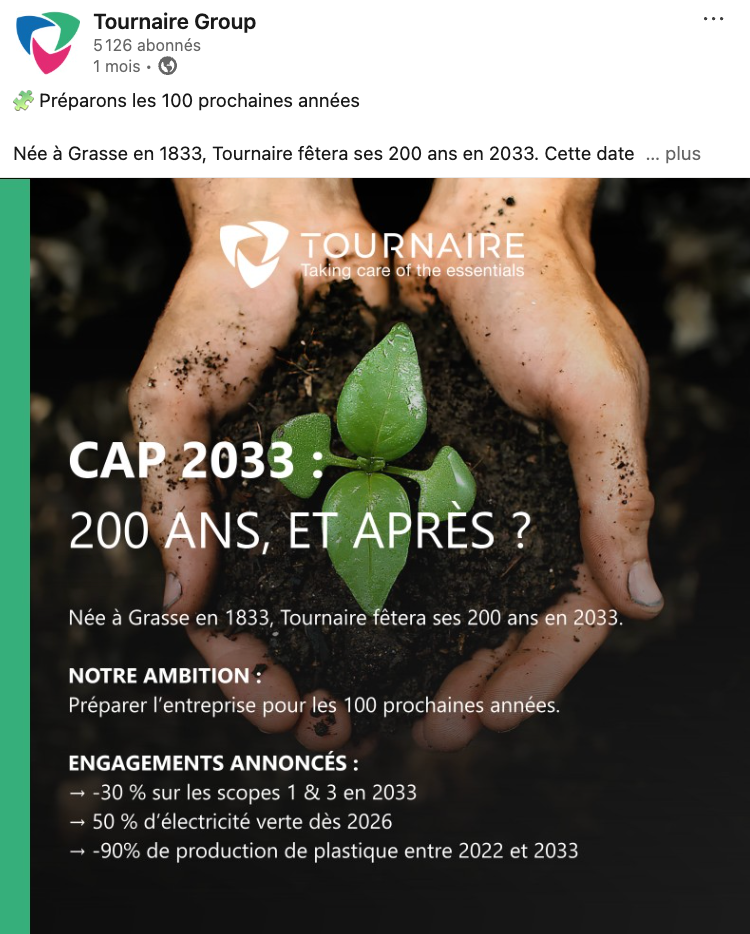
- Tournaire’s client’s vision: Tournaire’s approach to commitment and sustainability goes far beyond digital eco-design.
- Clear objectives: the Tournaire teams set out their ambition right from the specifications stage, and the initial aim was to achieve an EcoIndex A rating for the homepage.
- Essential guidance: right from the scoping phase, we make our client aware of how to select and evaluate ‘user stories’ (features). It is vital to take the time to explain the implications of each request.
Find out more about their approach: Tournaire’s sustainability approach and ambitions
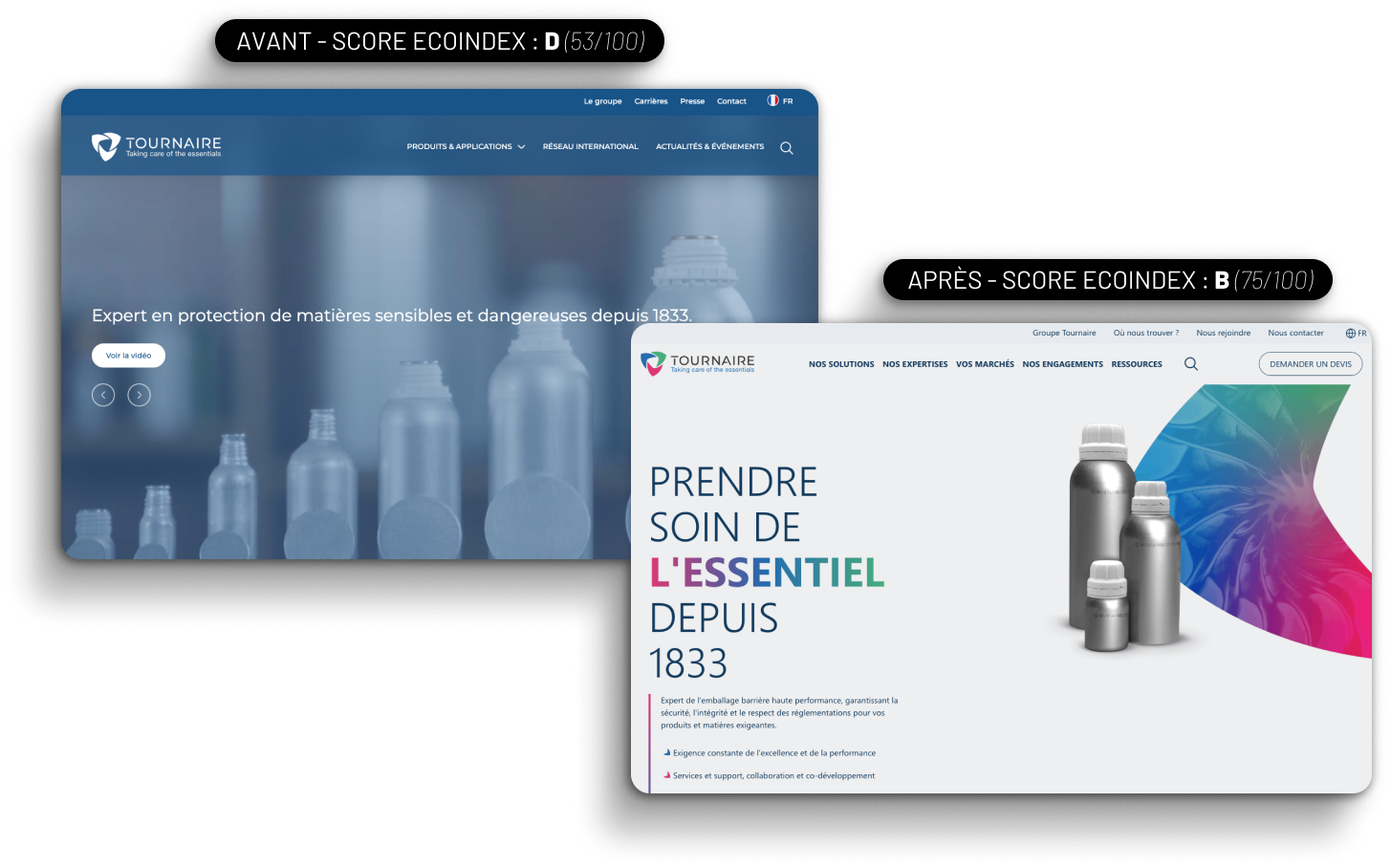
Before and After: The figures speak for themselves
All these efforts, although challenging, are paying off and having a real, measurable impact. It is also an opportunity to raise awareness of the impact of our choices.
This thought process is just as relevant to building a website as it is to all other aspects of the business (procurement, waste management, choice of machinery, the usefulness of the products designed, etc.)
A comparison with the old website:
| Old website | New website | |
| Eco-index score | D (53/100) | B or C (75/100) |
| Weight | 5.42 MB | 1.58 MB (divided by 3 👍) |
| Requests | 63, with 16 deal-breaking criteria | 29 (half as much ☺️) |
| WEBQAM eco-design matrix | not measured | 82 per cent compliance |
The client said they were “willing to make further compromises on the page’s design” if this would enable them to achieve objective “A”. This demonstrates that eco-design requires strong, shared leadership.
To continue making progress on this issue through the Digital Eco-design Day
The WEBQAM teams have been committed to responsible digital practices for several years; initially, we focused on training ourselves in digital accessibility, and for the past two years we have been concentrating more specifically on eco-design for the web.
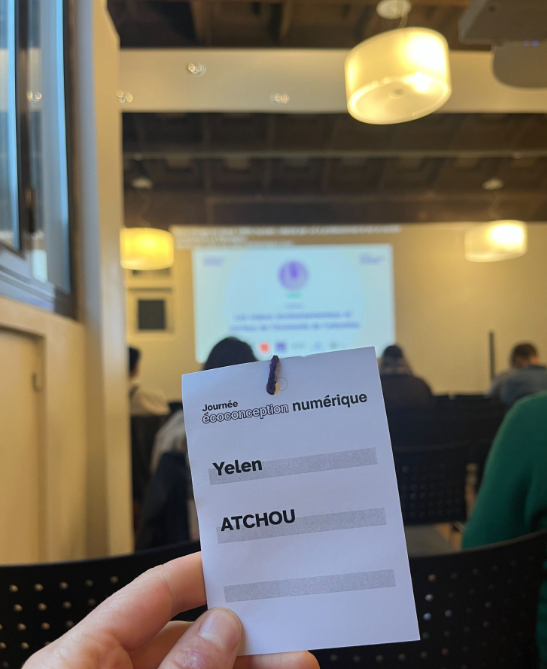
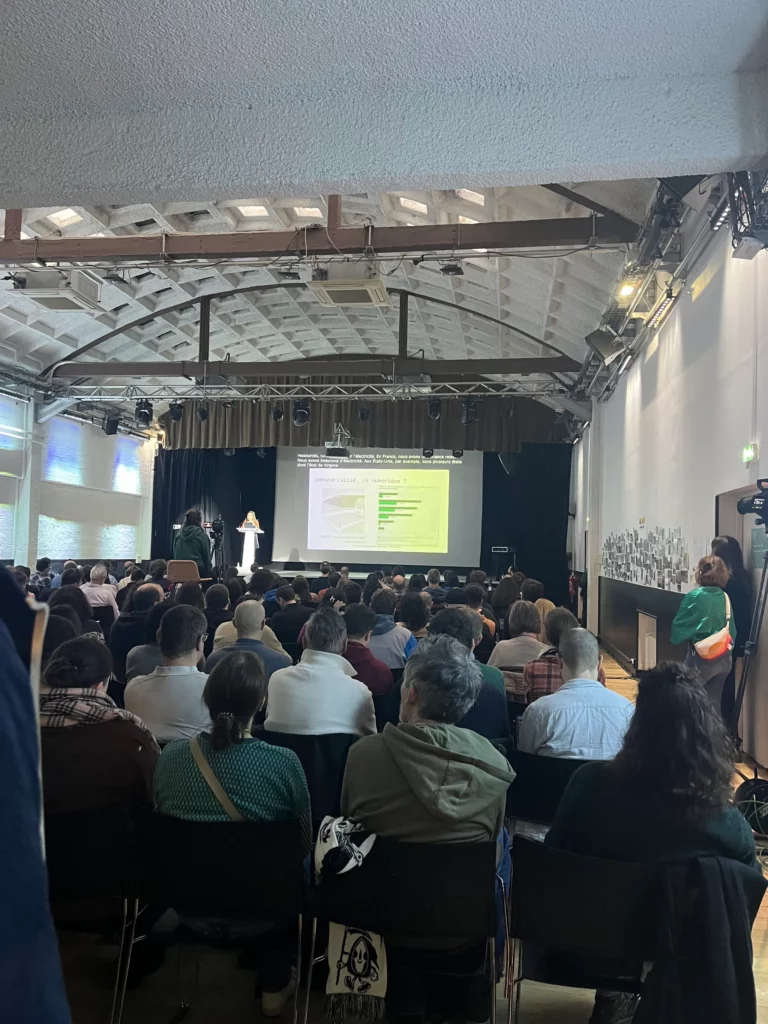
To continue developing our expertise and maintain the high standard of our advice on this subject, our digital eco-design specialist attends specialist events, notably the Digital Eco-Design Day organised by Designers Éthiques in Paris. Here are some of the insights she gained at the 2026 event:
01
Accepting that everyone is ‘learning as they go’: The main observation shared by the community is both reassuring and humble: everyone is still feeling their way through this complex subject, and there is still little definitive evidence regarding long-term outcomes. Hence the vital importance of sharing feedback and experiences.
02
Taking a broader view of the overall (and legal) framework: Eco-design is not limited to designers and developers. The legal framework, notably through the GDPR or the RGESN guidelines, can serve as a real catalyst for supporting the adoption of eco-design across multiple sectors.
03
Engaging all stakeholders: As we experienced with Tournaire, the various talks – including that by Mellie La Roque (SNCF Connect) on Responsible Digital Strategy – all emphasised the same conclusion: for an eco-design approach to be adopted, it is essential to involve project leaders and senior management.