La journée de l’éco-conception numérique, on y était !
This day of talks and workshops explored the topic of responsible digital technology from various perspectives: what actions have companies taken? What resources are available?

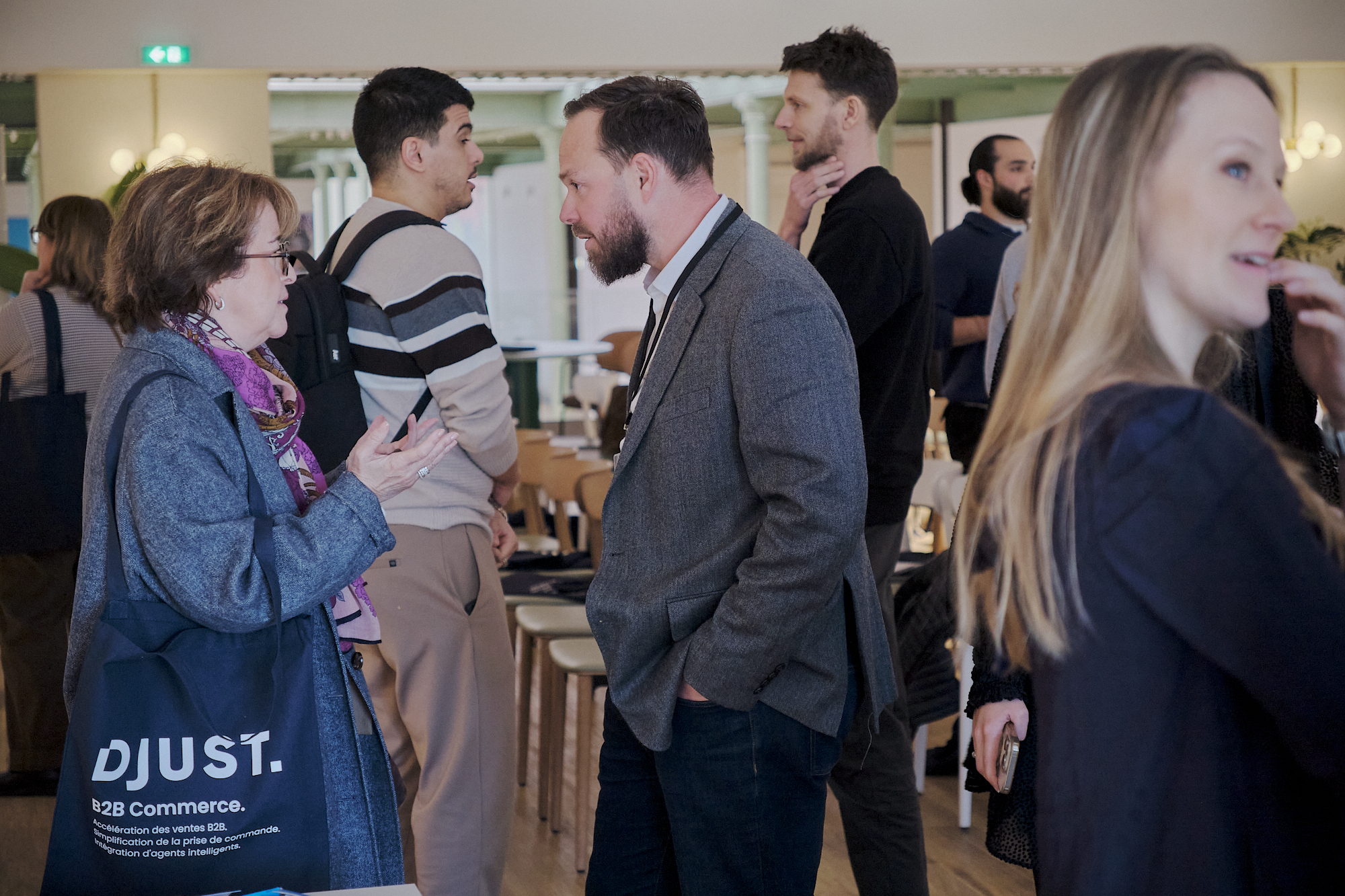
On 6 February 2025, together with Yelen Atchou and Amandine Guyot, we had the opportunity to take part in the Digital Eco-Design Day in Paris, organised by Ethical Designers.
This day of talks and workshops explored the topic of responsible digital technology from various perspectives: what actions have companies taken? What resources are available? What are the next challenges to be tackled? Open to all, it was an excellent way to get an overview of the situation and to exchange ideas with other professionals.
We went there with great curiosity to validate our processes and explorations on the subject of responsible digital technology with other stakeholders in the sector.
A day full of learning
Honest feedback
The day began with a rather pessimistic but truthful opening talk by Ophélie Coelho (researcher and author of the book *The Geopolitics of Digital Technology*). In particular, the speaker outlined the various social and environmental impacts of digital technology and AI in South Africa, due to the proliferation of data centres.
We also heard positive feedback from the Okoo (France Télévisions) product team and Orange Business. This provided a rich and transparent insight into the use of the RGESN and its limitations. We note in particular that raising awareness and securing the involvement of all stakeholders is essential to the successful completion of an eco-design project.
Furthermore, the speakers emphasised a fundamental principle: no approach is perfect, but none is a waste of time to undertake. We can, step by step, do our bit towards responsible digital development, but we will achieve nothing without collective effort and extensive testing.
Finding your frame of reference and your way of calculating
Furthermore, the event highlighted the fact that eco-design is nothing without evaluation and taking a step back. During his presentation, David Ekchajzer (a member of Hubblo and Boavizta) showed us that there are as many ways to assess one’s impact as there are users on Earth: what device do we use? What sort of internet connection? How long do we spend browsing? How many pages do we visit? How often? There are so many factors to take into account when assessing an impact.
However, today, in order to raise awareness of the issue, we naturally need to simplify matters and give a rough idea. Ultimately, there is no single ‘right’ way to count things; we need to find our own frame of reference and assess the parameters that make sense to us.
That is what we are currently striving to achieve in our web projects.
The Green IT workshop
During the afternoon, I had the pleasure of taking part in a workshop led by Renaud Heluin, a member of the Green IT association, to broaden my knowledge of the tools made available by the collective.
Over the course of three hours, we explored the collective’s various tools, as well as best practices for auditing a website and taking effective action. It was an inspiring hands-on session that tied in with the theory discussed throughout the day.
There is now a wealth of resources available on the subject of eco-design. It is a good idea to sort through them and take action using those you consider most suitable for your needs. Furthermore, combining different assessment tools seems to be a good way to gain a realistic picture of your website’s eco-design performance.
A review of this year’s event
Taking part in this event was a first for us, and we’ve come away with a lot of positives. It has given us a new lease of motivation to see our eco-design projects through before it becomes a matter of urgency.
Eco-design remains an emerging topic that raises questions for many professionals working in the digital sector (UX/UI designers, developers, SEO experts). The event achieved its objective by bringing together committed and knowledgeable stakeholders in the field, which helped to clarify our understanding of the issues at stake, provided us with the resources to continue taking action and, above all, inspired us to build relevant digital services that make judicious use of resources.
We’ll be back next year, that’s for sure!